I once watched a small workshop turn into a humming lab overnight—tools swapped for test benches, and curiosity for charts. The motor controller that sat on the bench became the quiet hero of that change. Around 68% of new drive designs now demand smarter control and tighter efficiency (a recent industry pulse), and I kept asking: how do we keep a simple controller from becoming the weak link? I write this with a soft hope and a bit of impatience—because these machines deserve better. In my view, the answer sits between elegant firmware and honest circuit design, where edge computing nodes whisper decisions and power converters make those choices real. This isn’t abstract theory; it’s greasy hands, late-night debugging, and the relief when the torque curve finally behaves. So—what exactly fails when a controller is pushed beyond its promise? That’s where we start next, peeling back assumptions to find the bits that really matter.
Traditional Solution Flaws: Where Design Meets Disappointment
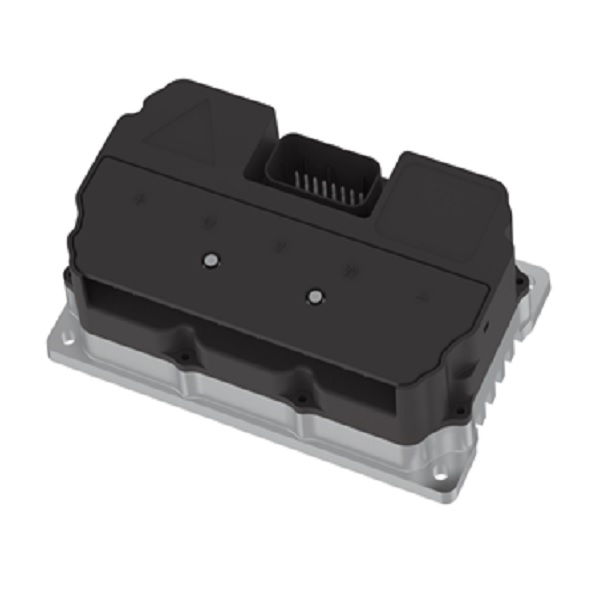
Early on, I often turned to a trusted bldc motor controller prototype and thought it would scale to every use. It never did. Legacy designs assume constant conditions: clean supply rails, predictable thermal envelopes, and simple PWM loads. Reality bites. Field-oriented control implementations get proud on paper, yet struggle when sensors drift or gate drivers heat up. The result? Unexpected torque ripple, brittle diagnostics, and a support ticket pile that grows faster than feature requests. Look, it’s simpler than you think—many failures trace back to three avoidable mistakes: tight coupling of logic and power stages, minimal fault isolation, and under-spec’d converters. Those oversights cost time and reputation.
In my experience, hot-swapping hardware isn’t the cure either. Engineers patch around power converters that sag under transient load, or they add filters that mask deeper timing issues. Then there’s software churn: incremental fixes hide architectural faults until a major use case breaks the chain. The industry phrases it as “scalability limits” and “maintenance debt”—I call it design amnesia. Short-term fixes work, temporarily. But they pile technical debt and make future upgrades painful. If you want fewer surprises, you must be willing to redesign with realistic boundary conditions, redundant sensing, and more honest thermal margins.
Why do these designs fail so often?
New Principles: How I Think We Move Forward
We need a roadmap that reads like rules of thumb. First, modularity: separate high-voltage power stages from control logic so a failed power converter doesn’t drag the whole system down. Second, graceful degradation—design for continued, if reduced, operation when a sensor fails. Third, embrace smarter diagnostics that don’t just flag an error, but explain a likely cause in plain terms. I like to sketch systems where edge computing nodes handle local prediction, while a supervisory layer manages system-level trade-offs. These ideas are simple, but putting them into practice asks for careful part selection and honest benchmarks.
Practically, that means prioritizing components with clear thermal and switching specs, using robust gate drivers, and validating across wider operating envelopes. Consider the role of model-based tuning and adaptive observers; they reduce calibration time and improve resilience. I’ve tried a few of these approaches in prototype electric motor solutions (which, yes, changed our testing cadence)—funny how that works, right? Short story: build for variability, not ideal conditions. Below are three metrics I now use when evaluating controllers—look for these and you’ll save headaches down the line.
What to Measure?
1) Thermal headroom: how much margin exists before component derating starts? Test with real transients, not just steady loads.
2) Fault containment: can the system isolate a failing gate driver or current sensor without losing essential function?
3) Maintainability score: how long to test, diagnose, and replace a failing module in the field? Keep that under an hour if you can.
Those metrics aren’t fancy. They are practical, and they reveal where a design will break or endure. I’ve grown impatient with glossy specs and prefer measurable behavior. If you align design choices with these goals, you’ll get closer to controllers that last—and to teams that sleep a little better. For more components and tested modules, see Santroll.